 Singapore's economy shrank 12.6 percent between April and June, according to the data from the trade ministry, as strict curbs were imposed to fight the virus
from The News International - Business https://ift.tt/2BYNNc7
Singapore's economy shrank 12.6 percent between April and June, according to the data from the trade ministry, as strict curbs were imposed to fight the virus
 US crude prices bounced back into positive territory a day after crashing below $0.00 for the first time owing to crippled demand
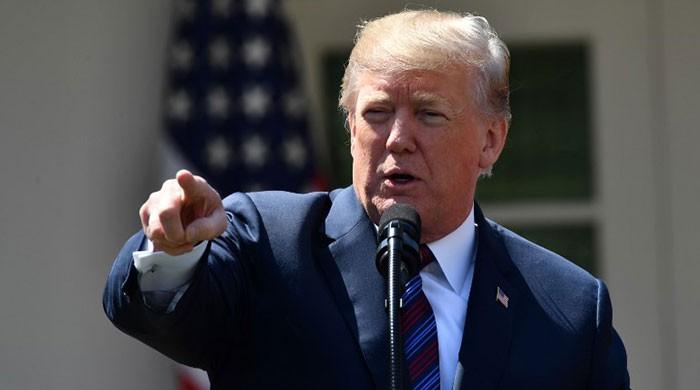 Trump's remarks came after OPEC producers and their allies agreed on Sunday to cut production by 9.7 million bpd
 The IMF board approved the debt relief for nearly all in Africa, but also Afghanistan, Yemen, Nepal and Haiti
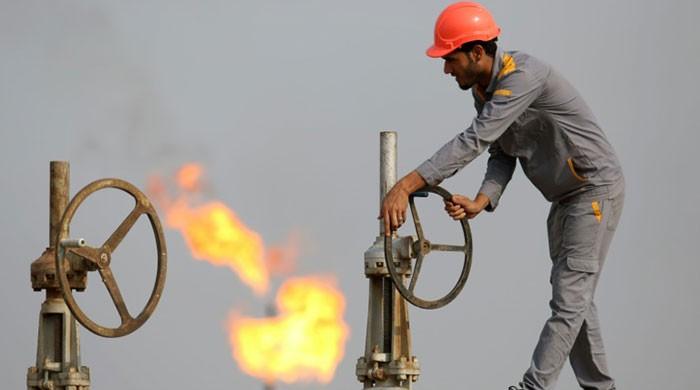 OPEC producers thrashed out a compromise deal after Mexico had balked at an earlier agreement struck on Friday
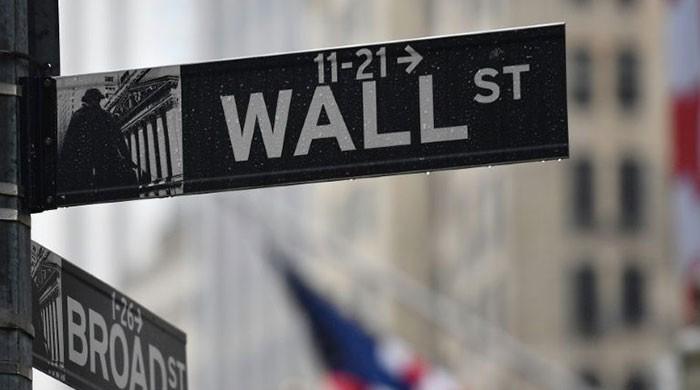 Wall Street powered to a solid rally, with the Dow gaining 1,600 point to close 7.7 percent higher,
 More than 80 countries, mostly of low incomes, have asked the IMF for help, the fund's chief Kristalina Georgieva says
 US and European markets fell around four percent Wednesday, with investors ignoring data showing far fewer private-sector jobs were lost last month than were expected
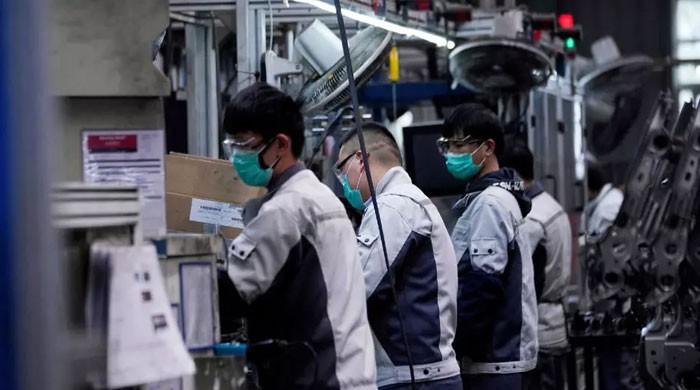 Coronavirus pandemic is causing "an unprecedented global shock, which could bring growth to a halt and could increase poverty across the region," said Aaditya Mattoo, World Bank chief economist for East Asia and the Pacific
 'The World Bank Group and IMF believe it is imperative at this moment to provide a global sense of relief for developing countries as well as a strong signal to financial markets'
BEIJING: China´s economy weakened to its slowest pace in three decades in 2019 as weaker domestic demand and trade tensions with the United States took their toll, official data showed Friday.
The world´s second-largest economy grew by 6.1 percent last year, its worst performance since 1990, according to the National Bureau of Statistics.
The figure matches an AFP analyst forecast and is within Beijing´s official target of 6.0-6.5 percent. But last year´s growth was down from 6.6 percent in 2018.
While China´s economy had been gradually losing steam over the first three quarters, growth stabilised at 6.0 percent in the last three months of 2019 -- the same pace as in the third quarter, according to the National Bureau of Statistics (NBS).
Ning Jizhe, commissioner of the NBS, said China´s economy generally sustained a stable momentum of growth in 2019.
"However, we should also be aware that the global economic and trade growth is slowing down," he said at a news conference.
He added that there were more sources of instability and risk, with the economy facing "mounting downward pressure".
The figures were released after a truce was reached in the nearly two-year-old trade war, as President Donald Trump and Chinese Vice Premier Liu He signed a "phase one" agreement on Wednesday.
The mini-deal includes a pledge by China to purchase $200 billion worth of US goods over two years.
In return, the US has pledged to slash in half some of the tariffs imposed on China, but levies remain in place on two-thirds of more than $500 billion in imports from the Asian country.
- ´New normal´ -
The World Bank said in a report this month that weakening exports in China had compounded the impact of its ongoing slowdown in domestic demand.
Policy uncertainty and higher tariffs on exports to the US also cast a pall on manufacturing activity and investor sentiment, it added.
The latest data showed that China´s industrial production grew by 5.7 percent last year, down from 6.2 percent in 2018.
Retail sales growth came in at 8.0 percent, down from 9.0 percent in the year before.
In December, sales grew 8.0 percent, and the NBS noted that online retail sales in particular had a strong showing.
But analysts note that China´s slowdown is structural, as it becomes a more developed economy and faces demographic challenges such as a shrinking number of people of working age.
Louis Kuijs, head of Asia economics at Oxford Economics, told AFP that Beijing considers such a slowdown part of a "new normal".
He added that major policy easing is unlikely as well, given the improvement in external outlook after the phase one trade deal and other signs of stabilisation.
He noted that Beijing likely wants to keep its powder dry, with policymakers aiming for a stabilisation rather than pick-up in growth.
"What they don´t want to see is a too-rapid slowdown," he said.
TOKYO: Oil prices spiked on Wednesday and Tokyo stocks took a hammering as investors took fright at escalating tensions between the United States and Iran after Tehran launched missile attacks on US forces in Iraq.
As news broke of a missile attack against two airbases in Iraq housing US and coalition forces, the benchmark Nikkei 225 index dropped nearly 2.5 per cent, with the broader Topix index off more than two per cent.
"It's not going to be pretty today," said AxiTrader's Stephen Innes, reacting to the initial reports of Iran's first response to the US assassination of military commander Qasem Soleimani.
Oil climbed sharply higher on the news, with the benchmark WTI jumping as much as 4.53 per cent to $65.54 a barrel before settling down slightly.
Japanese stocks were also affected by flight to the safe-haven yen — an asset in which investors often take refuge in times of uncertainty. A rising yen pulls down the price of Japan's export-led firms.
"The yen is firming to the 107.78-79 levels" that generally hurt Japanese stocks, Kyoko Amemiya, senior market adviser at SBI Securities, told AFP.
Japanese stocks are also being hit by concerns over the economic impact on resource-poor Japan from a higher oil price, Amemiya said.
Before the latest escalation, investors had been weighing how to trade the latest flare-up in Middle East tensions, with stocks choppy since Soleimani's killing.
In Tuesday trade, US stocks had finished slightly lower while European markets were broadly flat — Frankfurt outperforming its peers with a 0.8-per cent gain.
Iran fired "more than a dozen" ballistic missiles on Tuesday against two airbases in Iraq where US and coalition forces are based, the US Department of State said after the Tokyo market opened.
"It is clear that these missiles were launched from Iran and targeted at least two Iraqi military bases hosting US military and coalition personnel at Al-Assad and Irbil," Assistant to the Secretary of Defense for Public Affairs Jonathan Hoffman said in a statement.
The dollar fetched 107.78 yen in early Asian trade, against 108.42 yen in New York on Tuesday.
In Tokyo, the higher yen hit blue-chip exporters, which were down across the board, with Sony slipping 1.07 per cent to 7,573 yen and game giant Nintendo trading down 1.07 per cent at 42,480 yen.
Car giant Toyota was off 1.45 per cent at 7,603 yen and chip-making equipment manufacturer Tokyo Electron down 1.34 per cent at 23,200 yen.
Nissan was down 1.20 per cent at 628.8 yen ahead of its former CEO Carlos Ghosn's press conference in Lebanon after his audacious escape from Japan.
Overall, the Nikkei 225 index was trading 576.26 points lower at 22,999.46 about 30 minutes after the opening bell, while the broader Topix index fell 37.90 points to 1,687.15.
NEW YORK: World oil prices jumped on Friday after the US killed a top Iranian general, fanning fresh fears of conflict in the crude-rich Middle East, with Tehran warning of "severe" retaliation.
While global stock markets were mixed following the US killing of Qasem Soleimani, oil prices jumped more than three percent.
In Washington, a Pentagon official said the US would deploy at least 3,000 additional troops to the Middle East as Iran´s supreme leader Ayatollah Ali Khamenei promised "severe revenge" for the death of the military mastermind.
The killing of Soleimani represents "a significant spike in geopolitical risks and could lead to a direct confrontation between the US and Iran," Oxford Economics said in a commentary.
"The importance stems less from the potential loss of Iranian oil supplies... and more from the risk that this could spark a broader conflict that draws in Iraq, Saudi Arabia and others," Cailin Birch, global economist at The Economist Intelligence Unit told AFP.
"There is also a significant risk that Iran could launch a targeted attack on US ships in the region, which could disrupt seaborne crude oil flows and cause prices to rise further."
Oil prices saw record gains in September after attacks on two Saudi Arabian facilities briefly slashed output in the world´s top oil exporter by half.
Birch, however, talked down the prospect of a full-blown war and described Friday´s price gains as "fairly muted" so far.
European stock markets were mixed, while Wall Street retreated from records, with the Dow ending down 0.8 percent.
While US stocks were in the red the whole session, the moderate size of the losses suggested investors recalled the pullbacks following earlier violent events in international hotspots did not prove lasting, said Gregori Volokhine of Meeschaert Financial Services.
"It´s like previous geopolitical events and it doesn´t change the broader dynamic of the market, which is that investors are feeling good because the economy is better than expected, the trade war is easing and the Fed is being supportive," he said.
Among the sectors, petroleum companies such as Schlumberger and Apache gained, along with defense companies including Lockheed Martin and Northrop Grumman. But airlines shares were under pressure.
Meanwhile, investors piled into safe-havens, including government bonds, the Japanese yen and gold, which reached a near four-month peak.
